
Euronics Automatic Soap Dispenser Repair -2
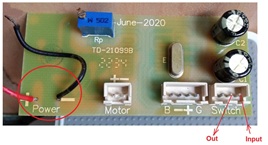
The second unit of the Euronics automatic soap dispenser has now been repaired. Detailed photos were already shared in the previous article, so here, details regarding the further investigation of the fault are being shared.
This 2nd unit is checked, getting 6v on PCB Power connector. on Leaf switch I am getting Input 6v but there is no O/p.
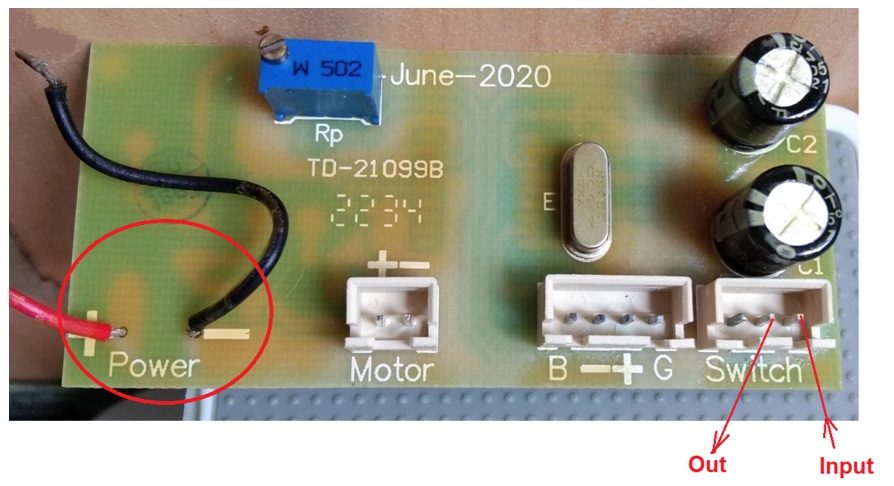
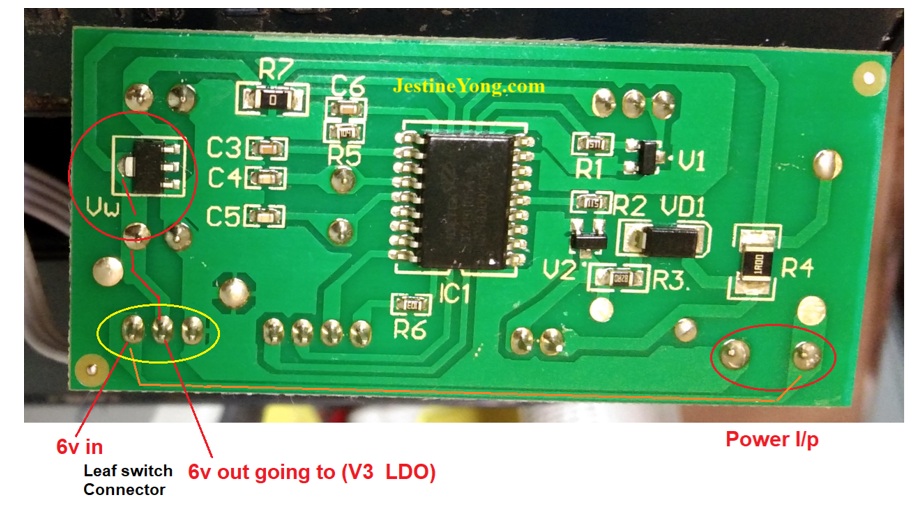
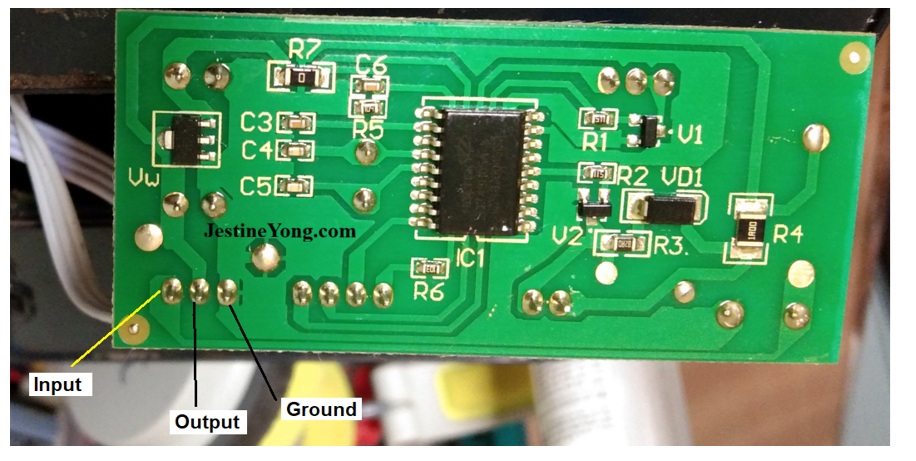
In the image above, I have marked the track running from the power source to the Leaf switch and from the switch to the LDO. This LDO supplies voltage to the entire circuit, with an input of 6V and an output of 3.3V.
Now it is time to inspect the leaf switch unit. The wire might be broken.
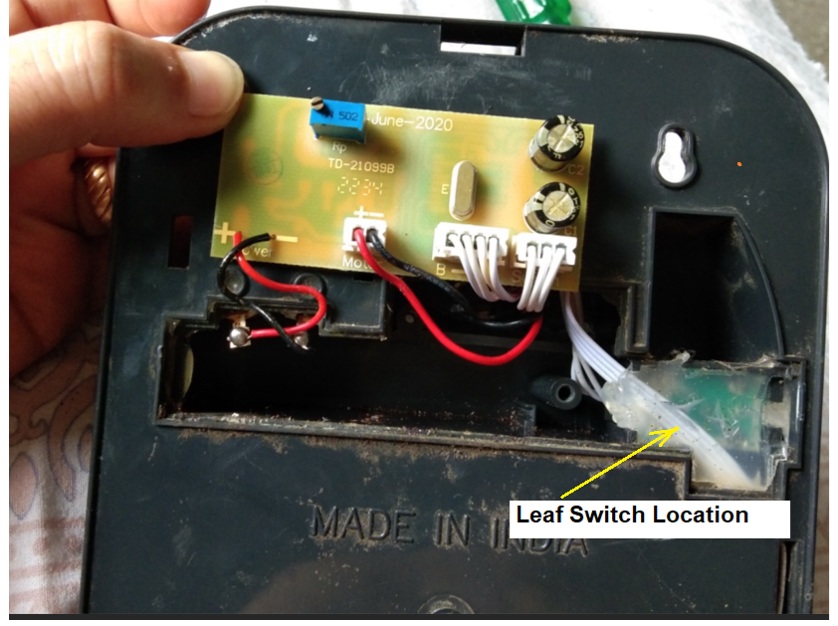
To investigate further, the silicone glue was removed from the unit, and it was found that the PCB was completely damaged.
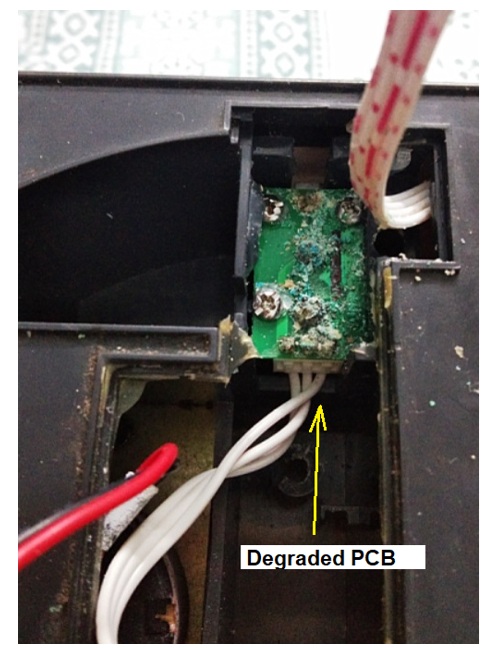
Now, I need to remove the entire switch unit for further inspection. I carefully removed the three screws and took out the PCB.
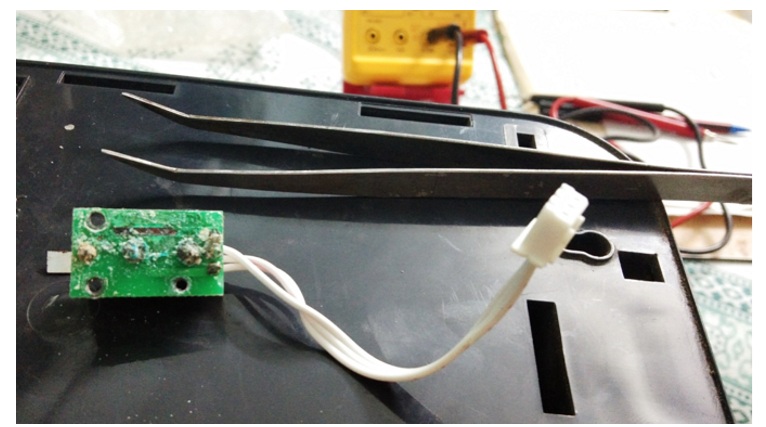
I Cleaned the PCB using IPA & this is the condition of the PCB
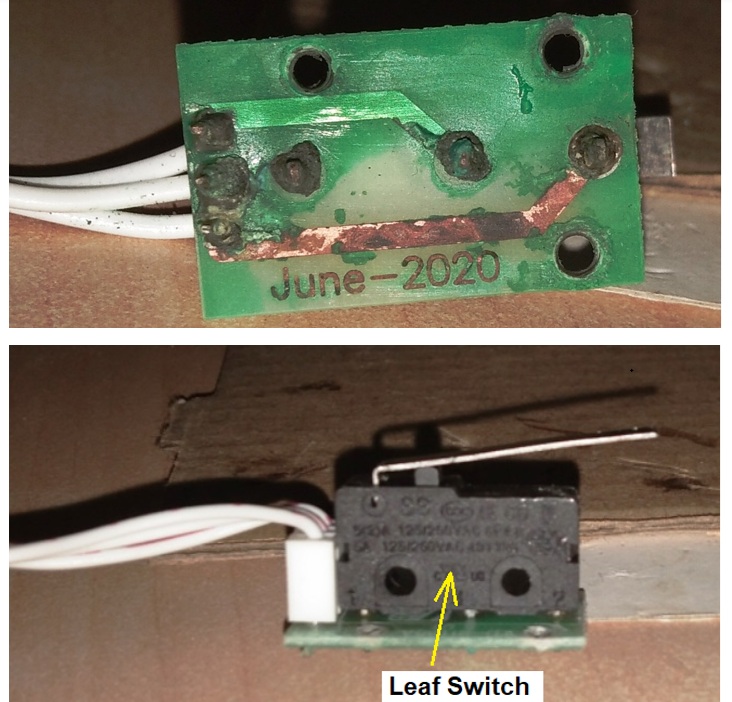
The solder points on this PCB aren’t melting, likely due to some kind of coating.
I gently abraded the top layer with my micro-grinder and removed the leaf switch from the PCB for the testing. I found Outside of the PCB switch doing his job.
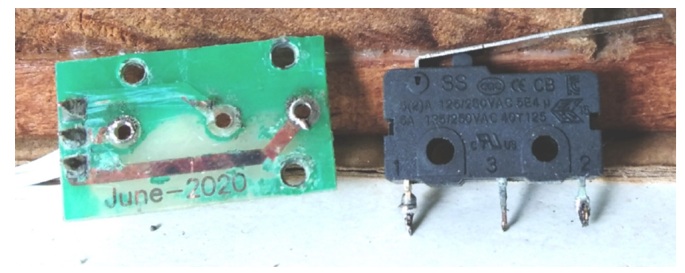
So I repaired the PCB tracks using thin copper wire. & tested for working, now it is working fine.
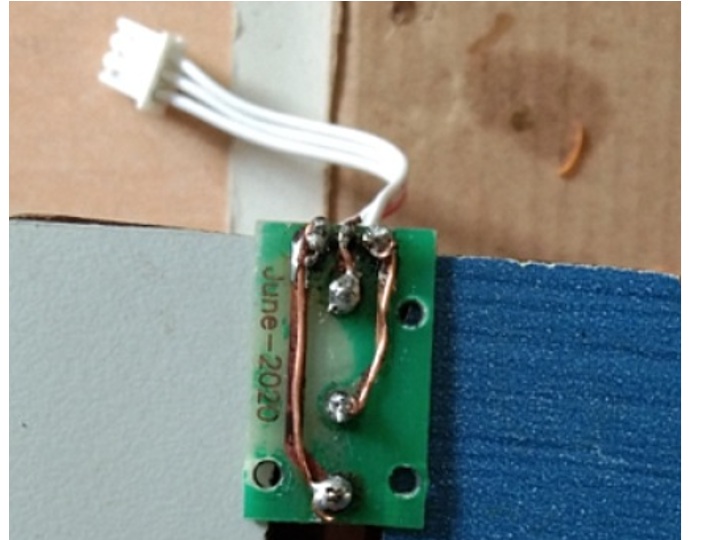
After the job I put the PCB back to his location.
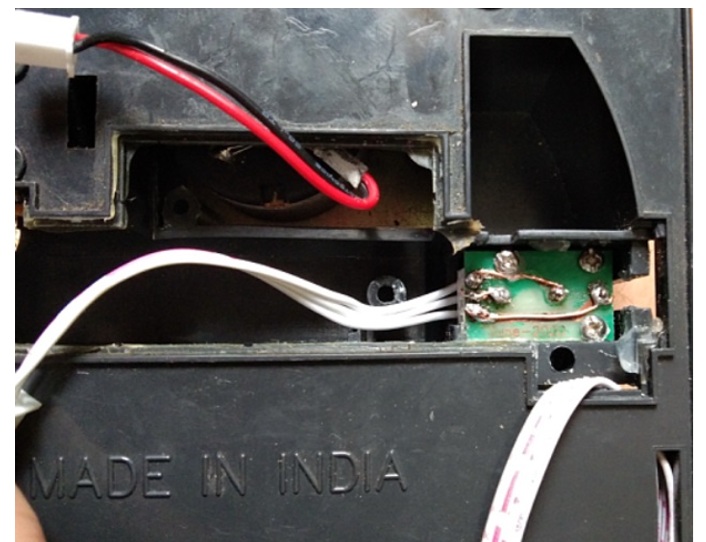
The unit was assembled for testing, and it is now working properly. Hot glue was applied to the PCB, and the unit is now this 2nd unit is ready for pickup.
Now A question for my fellow members: Could someone explain why one terminal of this switch is connected to ground? Why won’t it short-circuit when the switch is pressed?

This article was prepared for you by Yogesh Panchal who works as a Computer Hardware Engineer in Mumbai India.
P.S- Do you know of any your friends who would benefit from this content that you are reading now? If so, forward this website to your friends or you can invite your friends to subscribe to my newsletter for free in this Link.
Note: You can check his previous repair articles on USB WIFI DONGLE REPAIRED
 (31)Dislikes
 (0)
(0)
14 Comments
Leave a Reply





Parasuraman S
July 25, 2026 at 11:17 am
Fantastic trouble shooting and rectification. Great job! Now about the question: It looks like a switch with center portion going to the LDO. It could be an NC type which means the pin of the LDO is kept grounded when not switched on, whereas it gets connected to the power when pressed supplying voltage to the LDO. Probably the LDO, the number of which is not given could have the Vin at center pin and out from the third pin. Hope this makes sense! I stand open for correction! Wonderful article with food for thought! Bahuth Acha, Bai!
Yogesh Panchal
July 27, 2026 at 4:10 pm
Thanks! for your Comment, Sir
I already had a faulty switch of this type lying around; when I opened it up to understand how it works, I discovered that it can be used in various ways. I will share the details very soon.
Anthony Paterson
July 25, 2026 at 8:03 pm
You live and learn . . .
Didn't know what an LDO was!
Low Drop Out regulator ie the output voltage is maintained even as the input nears that voltage.
An answer to the question posed is under review.
Anthony Paterson
July 27, 2026 at 2:14 pm
OK back to your question:
Micro-switch (leaf-switch) has power applied when the cover is in place and removed when the cover is removed - so Battery IN and Battery OUT are connected to NO (Normally Open) contacts and the NC (Normally Closed) contacts are connected to ground. I presume grounding ensures the device is non-operational. The battery isn't shorted to the ground because they are never connected.
Yogesh Panchal
July 29, 2026 at 12:53 am
Anthony Paterson,
Thanks! for your view, when i traced the circuit i found output is
from pin no.1 that is Common Pin. & pin no.3 is Input, that is NO pin.
Yogesh Panchal
July 27, 2026 at 4:13 pm
Thanks! for your comment, Anthony Paterson
Albert van Bemmelen
July 25, 2026 at 10:26 pm
About your question would it be a lot easier to answer it correctly when a circuit of this switch attached to the pcb tracks was given.
But maybe it can simply be answered after testing the switch contacts in practice attached to the input of an oscilloscope?
Mark J
July 27, 2026 at 12:29 am
Yogesh we-lel done...
Yogesh Panchal
July 29, 2026 at 12:53 am
Thanks!MarkJ
AdamS
July 27, 2026 at 4:15 pm
The switch is a changeover type, so when operated it connects the input of the LDO to the 6V power source to allow the dispenser to work, and when released it connects the input of the LDO to GND to stop it from operating. This is simply good practice to make sure that the LDO is properly switched off when not in use.
If the input is left floating, then there is a chance it could pick up stray voltages from nearby and behave unpredictably, and no one wants an unpredictable soap dispenser, especially when you're trying to refill it!
Yogesh Panchal
July 29, 2026 at 1:04 am
AdamS,
When we connect the voltage input line to GND, it shorts out and damages the circuit.
Yes, when the switch lever is released or the cover is opened, the switch enters a 'floating state'; you have correctly understood the switch's operation in this regard. However, the input is certainly not connected to the ground.
Yogesh Panchal
July 27, 2026 at 4:19 pm
Thank you! Albert
I didn't know anything either, until I opened up a switch lying in my pile of junk that was exactly the same type.Sharing it very soon.
Philip
July 29, 2026 at 8:26 am
Mostly, the NPN switching transistor will have the middle pin connected to circuit positive power input. This case doesnt apply to what I see in one of your photos, because the power capacitor positive pins are not linked to the middle pin of the switching transistor. When the power switching transistor is of PNP type, which I suppose is what I see in one of the photos, then mostly, the grounds of the circuit may be positive. This makes the circuit to appear to be reversed. Open to rectification.
Yogesh Panchal
July 29, 2026 at 6:06 pm
Thanks! Philip,
That is not the case here, as I have already measured the voltages. You can see the LDO marked 'V3'(on Left side); electrolytic capacitors are connected to its input and output, correctly placed across the positive and negative lines.