
Almost Brandnew Uni-T UT116A Unexpectedly Is Defect After Hardly Been Used In The Past Years
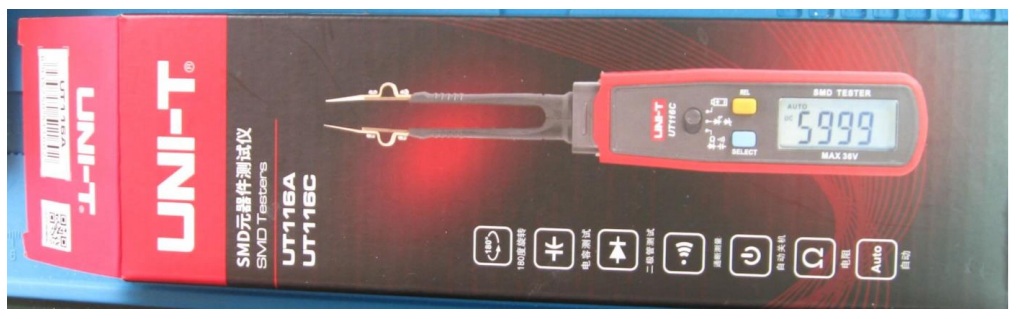
In the past a brandnew Uni-T tweezer tester, model UT116A, was received with a bad slider switch knob, that immediately got broken and failed after it was tested. And without any warranty from seller or refund from Aliexpress afterwards it needed to be fixed by replacing the from the start bad sliding mini slider switch. Which I successfully did and also mentioned in my repair article in 2023 that can be found here : https://jestineyong.com/fixing-a-defect-but-brand-new-uni-t-tweezer-tester/
Recently I needed to check some smd components on my brother’s 24 year old defect thumble dryer control panel. So I grabbed my previously perfectly working UT116A tweezer tester. But sadly noticed it no longer worked after only producing a short beep when both AAA batteries where inserted.
So I opened the tester to see what ever was wrong with it this time? It turned out that the BAT copper pad was completely gone why the battery spring in the other half of the case no longer made any decent connection. There was no corrosion whatsoever, only a now completely gone BAT- copper pad!
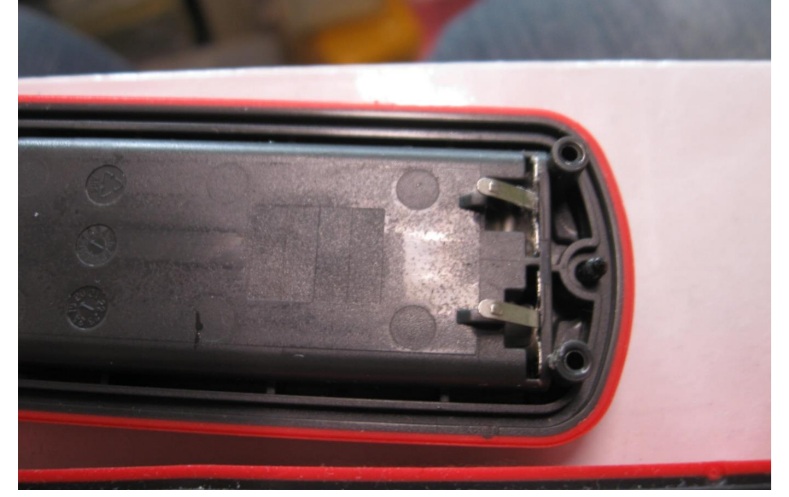
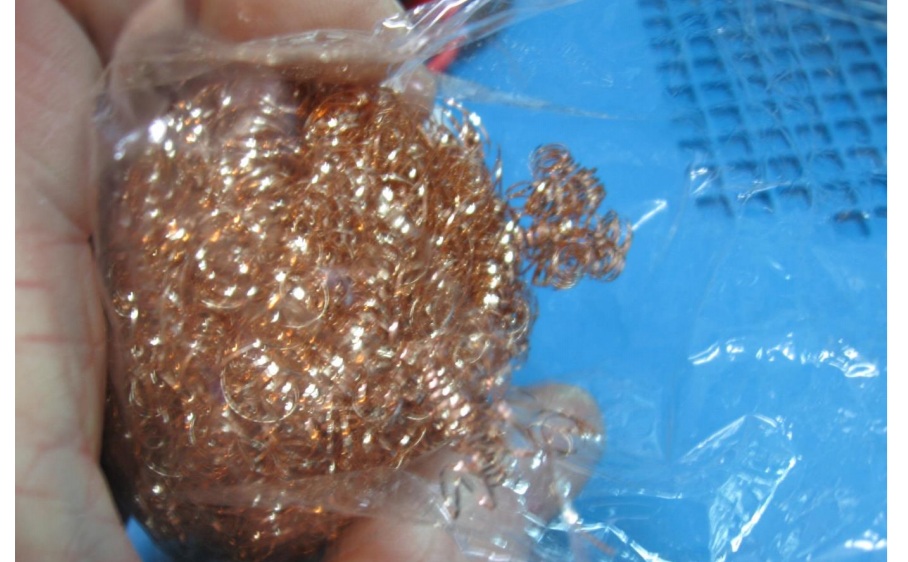
So what I did was fix a new pad with some copper strips from a thin Soldering Tip Cleaning Ball. And that fixed the problem perfectly.
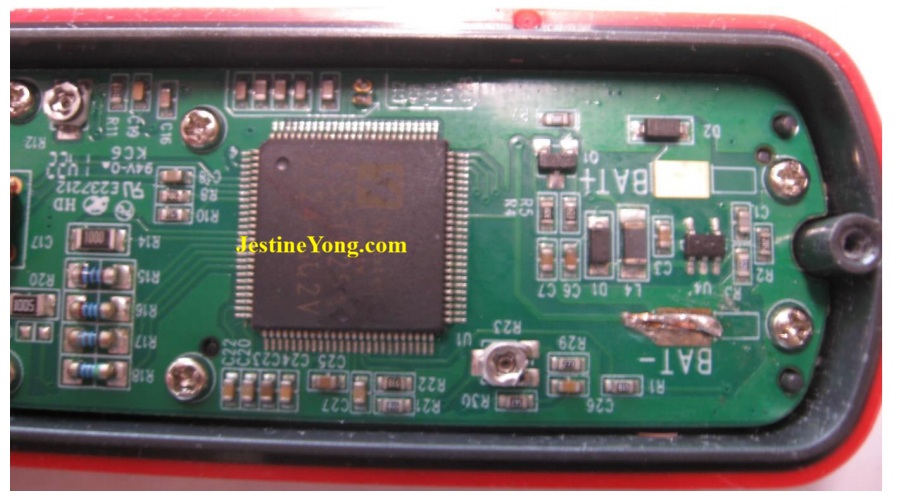
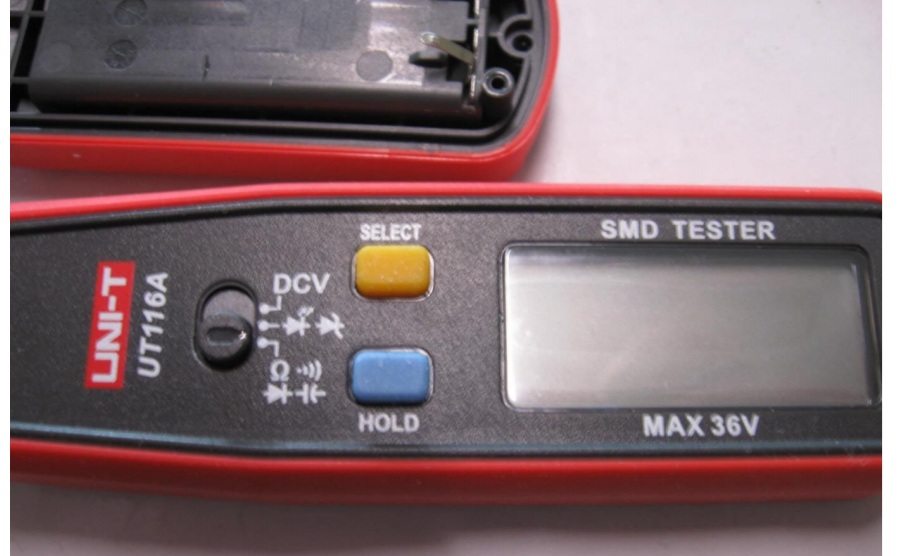
But after that problem was solved my UT116A still had another unexpected problem! Now also the yellow SELECT pushbutton for setting the scan function completely failed working too!
Which was most unexpected to say the least! I examined the board push button side and found nothing wrong with the gold plated contacts of this yellow pushbutton.
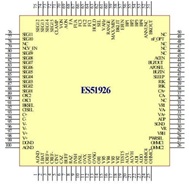
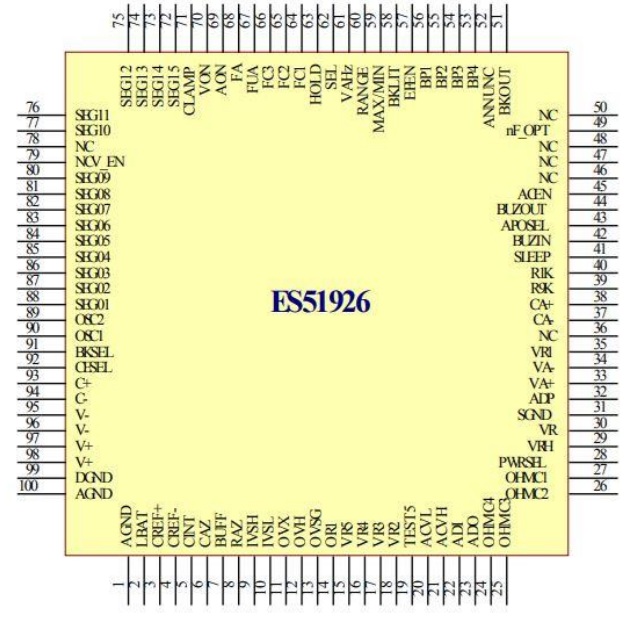
I had no service manual or circuit of this tester so I started measuring to what pins of the circuit this button was connected. And found that one side (the bottom pad of the pushbutton pad) was connected to the collector of smd transistor Q3 with marking 1AM, and also to the SEL pin 62 of the ES51926A processor. Which made sense. And the other side of the push button pad was connected to pin 64 of the processor.
The emitter of Q3 was connected to the BAT- pad. The base of Q3 is connected to a resistor with marking 205 and goes through PTC1 and R13 to pin 11 of the processor. This processorpin is the high voltage input for C/R measurements. And pin 66 of the processor was connected to BAT-.
Which was confirmed after finding the datasheet for the 3000 Counts Smart DMM processor ES51926 here => https://www.alldatasheet.com/datasheetpdf/pdf/329818/CYRUSTEK/ES51926.html or here in color => http://www.cyrustek.com.tw/wp-content/uploads/ES51926.pdf These also contain some examples of this processor circuit. Although maybe these datasheets differ from my UT116A processor that ends with the A after its number.
Strangely expecting that replacing this Q3 1AM transistor would solve all my tweezer tester problems, it only solved the Select pushbutton function because afterwards the tester no longer produced any previous working 21V test voltage. And the tweezer input probes now also had a very low impedance and low input test voltage.
Also testing the original now obviously defect removed Q3 transistor in the Peak Atlas DCA75 pro semiconductor tester showed a very strange result saying it was a still working Darlington npn with a hFE of 257? So that tester also was causing concerns about its use to say the least!
Conclusion: I suspect that these UT116A testers suffer from a bad manufacturing process that not only make poorly created copper pads and tracks, but also use transistors that just stop working even after hardly ever been used? My just a couple of times used tweezer tester is no longer worth fixing because apparently also the processor must have stopped working somehow for unknown reasons.
Or maybe it unexpectedly died after it was track traced with my old Metex M-3800 DMM in diode beep test mode? Which could be because of the fact that this about 3V max processor was measured with a DMM that operates on a much higher 9V block battery? (which also may be the fact that processors die like those used in my successful DY294 repair?)
But the reason that these Uni-T tweezers testers are so cheaply sold for just about 21 euro must also be the reason that these testers are so poorly manufactured. They look great on the outside but do fail working unexpectedly in no time!
So let this be a warning to other tweezer tester buyers of the Uni-T testers! I previously liked that they operated on just two AAA batteries, but my trust in their design quality is sadly entirely gone!
My older Mastech MS8911 and DT71 digital tweezer testers still work but are somehow limited when smd components are tested in-circuit. The Mastech needs special CR2450 3V batteries and so is not rechargeable. The DT71 was sold with the promise that it also would show ESR values, but that was in a later update completely cancelled. Also was the new firmware upgrade for this expensive DT71 problematic for other problems like existing calibration issues. And the so praised magnet tweezer arms were not magnetic at all! It was an expensive sold tester without the ESR test, the not working calibration and limiting firmware upgrade.
Recently I therefore bought a Fnirsi LCR-ST2 tweezer tester that was not cheap being about twice the price of my now defect UT116A tester, but definitely is made with very interesting options, like a 1.47 inch bright color HD screen, dual equivalent display mode showing also ESR or Rs of capacitors as also Rp values, and D and Q factor, complete with detachable USB Tweezer arms and Kelvin Clip arms. And it also uses a modern digital selection rotary knob. Fnirsi even added a magnet to the back of the tweezer to be able to easily stick the tweezer to any metal surface. Last month it was immediately easily upgraded to its newest version 1.5 firmware upgrade in just a few seconds. (it was received with still older 1.4 version).
I now have several other of Fnirsi’s fine made products, and they are good made instruments! The only worry I have with them is that they almost all use chargeable lithium batteries. Which may in time be the one part that fails first, and was the nice thing I liked about the portable Uni-T testers that just used plain AAA batteries instead.
Hopefully this article now will prevent other readers from buying apparently inferior measuring tools and from wasting hard-earned money on them!

Albert van Bemmelen, Weert, The Netherlands.
Please give a support by clicking on the social buttons below. Your feedback on the post is welcome. Please leave it in the comments.
P.S- If you enjoyed reading this, click here to subscribe to my blog (free subscription). That way, you’ll never miss a post. You can also forward this website link to your friends and colleagues-thanks!
Note: You can read his previous article on Brandnew Musical Tesla Coil Already Defect Within 10 Minutes! But Now Fixed and Working Again!
 (37)Dislikes
 (0)
(0)
17 Comments
Leave a Reply





Yogesh Panchal
May 16, 2026 at 6:29 pm
Good Fix!Albert,
Very Handy Tool for SMD component testing, I found most of time tweezers tester failure because on PCB components test without discharging surrounding capacitors or forget to select the switch on appropriate Mode.
Albert van Bemmelen
May 16, 2026 at 9:57 pm
True Yogesh!, most tweezer testers fail horribly when testing components in-circuit. And the Mastech, and Fnirsi's new LCR-ST2 probably do a better job at that than the standard Uni-T DMM operating type tester does. I know that at least the Mastech MS8911 uses another measuring method.
Sadly the service that the Uni-T tester seller afterwards gave was very unsatisfying. The only reply I at the time got was to have the tweezer tester repaired in any available service center. Even when it was received brand new but already broken. So also the afterpay service was useless!
And this hardly used now defect UT116A is not even useful for scrap parts since even the in them used transistors fail on their own for no obvious reason too.
Why it now was more than time to warn other potential buyers for their poorly manufactured already gone tweezer tester. That normally in the EU would have given a full 2 year warranty on this product!
Because replacing the defect 1AM smd transistor and the Bat- copper pad only solved the Select button problem but not my now still defect UT116A tester meter in the meantime I bought another cheap tweezer tester. But mainly because my other tweezer testers do not provide the handy safe about max 1mA +21 V DC test option of the UT116A.
Paris Azis
May 16, 2026 at 11:39 pm
Hello Albert! Interesting article, well presented. This is the common fate of all these cheap instruments. Just a few uses only and then "go get a new one".
I also don't like the use of custom made rechargeable batteries in every use. I like the alternative of finding the brand I prefer as regards batteries. This means their classic form one can find in the free market, no matter if they are rechargable or not. In any case, I prefer them being detachable...
Albert van Bemmelen
May 17, 2026 at 12:48 pm
Understood dear Paris, nice to hear again from you after a long pause!
About the detachable batteries mentioned, it is a new rule from the EU in Brussels that becomes a law that new (portable) devices like smartphones now need to have them removable so they can easily be replaced and recycled in the near future when needed. Which is also safer avoiding lithium fires and more pollution!
Yhoni
May 17, 2026 at 12:40 am
Thank you for sharing it.
Mark J
May 17, 2026 at 2:17 am
Informative article Albert . Thank you for sharing.
Parasuraman S
May 17, 2026 at 10:00 am
Very informative and educative article that has come from a veteran expert in electronics field! Many thanks for sharing, dear Albert! Article is very, very useful! It provides an insight into these SMD Testers!
Philip
May 17, 2026 at 8:01 pm
There are areas in this article that leave me in a wilderness of confusion; Paragraph- The emitter is connected.... goes through..... of the processor. Now, how can this be a high voltage input ? I expect a transistors base link to a processor IC to be a low voltage switching signal (I stand corrected ). If emitter of transistor Q3 is linked to the BATT-, and the base pin of the very transistor connects to the processor, I, going by my own trustworthy assumption would consider the transistors' third pin to be the collector. I'II go right ahead to investigate its voltage feeding pathway and the attached components. During checking, its important to disconnect the processors all vcc and grounding pins to keep the processor from harms way. The ravaging voltage/current of multimeters can kill a processor as you say. As for the transistor, I'd pull it off-board to check its condition. Please new readers, air your views, This is a very knowlegeable person I'm responding to. And to you the lost oldboy Azis, hi !
Imoudu.O
May 18, 2026 at 12:24 am
Albert,I'm empathetic to hear this happen to you,having experienced same from my brand new uni-t multimeter which I also shared on this platform in the past.
On what Philip said concerning the use of testing probe on transistors or any other components can affect processor ic baffles me.i need more education on this matter
Albert van Bemmelen
May 18, 2026 at 12:48 pm
Thanks for sharing that informative and similar uni-t processor experience Imoudu! As already was suggested in my article and my post to Philip, these processors probably are very weak and assumably can get (even if partly) detroyed by just using a dmm diode test voltage on their inputs. Which just proves how useless they easily and instantly become for not having any strong prevention structure for incoming very low external currents/voltages! Something that normally never is warned for or is spoken about. Why even the touching of the probes already can cause a small injecting voltage. As you know when two different metals generate a voltage, the setup is typically called a galvanic cell or voltaic cell. But same thing can happen through (ESD) Electric Static Discharge. The weaker these large integrated processor/controllers chips are manufactured without any integrated safety TVS (Transient Voltage Suppressor) diodes the more they can save on manufacturing them, and the more units manufacturers like Uni-T probably will cheaply sell!
And let us hope that no EMP pulse will be generated in the near future, as it likely will destroy all our modern weak completely unprotected devices without ever touching them!
Albert van Bemmelen
May 18, 2026 at 3:56 am
I guess you didn't read the datasheet Philip where it clearly says that the mentioned pin 11 marking is a HV R/C input! Because as you can see, it can measure up to 36V DC according to the text on the front!
So I did not make this up. And I naturally didn't kill the tweezer tester by not first disconnecting the 2 AAA batteries because I only measured the circuit connection to Q3 without them attached. And the only voltage I may have injected into the tester only came - as I wrote - from my as Diode beep tester connected digital multimeter. And of course as mentioned I also did test Q3 off circuit in the Peak Atlas DCA75 pro semiconductor tester afterwards. By using the special smd transistor test adaptor for connecting all 3 wire connections to the 1AM npn transistor. In their for that special PCA23 SOT23 Test adapter. Which gave a wrong result stating it was a good Darlington it was NOT!
Removing the multi ground and Vcc pins as you are mentioning to the here used multi 100 pin processor is impossible without breaking any of the tiny pins! And as you and I already claim it must have been my low diode beep test voltage that killed this 3V max processor.
But in my defense my Uni-T UT116A now was already defect twice anyway without my doing! And not only the slide switch already was broken, but now also Q3 and the gone BAT- copper pad. Which was certainly NOT my doing! Why these UT116A testers in my experience definitely are poorly manufactured with a poor support from the Uni-T firm! MY WARNING AS I STATED IS NOT TO USE THE DIODE BEEP TEST ON CIRCUITS IF IT CAN BE AVOIDED!.
But in this case I had no other option because I had to track the connections to the SEL push button pads in the circuit. Also because the manufacturer doesn't provide any service afterwards and neither shares any info about the circuit of this UT116A which is sadly kept a complete secret.
Philip
May 18, 2026 at 3:54 pm
1.True sir, I never searched the datasheet reference. 2. Imoudu sir, I'm not fit enough to debate convincingly in matters electronics. All I know about processors is that they internally comprise transistors, capacitors, diodes, resistors and what have you. So when faultfinding the multimeter probes may transmit damaging voltage/current to a processor, this can kill the processor faster than you can blink your eye. Now again, there is always residue voltage residing in the processors even during host-component switch-off. So you never know what you could be triggering or damaging for that matter in the processor when troubleshooting a circuitboard with a multimeter. So it makes sense to me if I POSSIBLY can isolate the processor by cutting off the necessary circuit tracks at suitable points. Some processors get vcc, for example, from voltage/current regulator pins. Soldering a small jumper wire may make a reconnection. Approaches vary greatly, Imoudu. Some of the ways we work, I tell you ! ....
Albert van Bemmelen
May 18, 2026 at 6:12 pm
Philip, your suggestion to disconnect all the processors Vcc and grounding pins to keep the processor from harms way and using solderjumpers afterwards may still end up in killing your partly disconnected processor. Because without any ground connection to the processor all the voltages on the inputs are still connected and not safe! And in the Uni-T UT116A circuit there are different ground levels too. There is Agnd and Dgnd. And the Battery voltage is given as V- to AGND. But the chip also has several V- also V+ pins too! So there is no telling what just a small ESD discharge might do when you use that method.
Anyway, my bad experience with the unserviceable UT116A means that I probably never will buy any new Uni-T model again.
Albert van Bemmelen
May 20, 2026 at 6:59 pm
Additional update: Just to make sure what voltage exactly was given by my Metex M-3800 multimeter in diode beep test that assumably kills processor/controller chips, I measured its output voltage on its probe leads. I used my new portable ZOYI ZT-XT1 universal transistor tester and DMM in one device for that. It showed a constant dc voltage of 2.4449 Volts.
My safety tip in these cases could be to use the 200 Ohm scale measurement instead. That only gives a max measured dc voltage output on the DMM probe leads of 1.0337V!
It of course won't give an detectable audio beep but still shows if there is a straight track connection in the circuit measured. But it will take more time to also read the display value of the Ohm resistance. Especially when it involves measuring all 100 copper tracks!
MP
May 21, 2026 at 6:12 am
Your knowhow is beyond measure, and the sea of your handy tools a treasture.
Albert van Bemmelen
May 23, 2026 at 10:05 pm
It is often Win some, Lose some I guess MP?
The Irony here is that my old now defect UT116A still is useful for beeping through low resistance connections that may have killed it in the first place! Because it still beeps when the probes are connecting or very low in resistance. And the other thing it still does is showing DC/AC polarity without any value. And it also still beeps a few times before it automatically switches off to save battery life LOL! But its display never shows any correct data and the about 21V DC voltage is entirely gone. Which I guess was the small smd SOT23-5 component with marking SG4LB. So this defect Uni-T tweezer tester is not completely useless yet but no longer my favorit brand of digital meters.
Albert van Bemmelen
May 24, 2026 at 2:26 pm
PS: Even Uni-T acknowledges the extreme ESD sensitive state of this 100 pins controller/processor in their datasheet where it states this warning!:
1. The ESD protection circuits protect most of pins. However pins, V+, V-, AGND, DGND and VR1
are not protected enough because the parasitic effect must be decrease. Therefore enough external
protection is needed for assembling, carrying and keeping. In addition, components connecting to
these unprotected pins have to be soldered on board before the IC is soldered.
2. All the zener diodes above are used for IC protection. These protections are needed and these zener
diodes must be soldered on PCB first before soldering ES51926 on.
3. The OVX pin resistance have to be kept below 120kΩ for the capacitance mode accuracy (3/30nF
range). For higher voltage protection, additional configuration of PTC protection is necessary.
=> So this clearly shows how easily this uni-t chip can be damaged and how difficult and hard it is to even solder-on this chip safely onto the tweezer tester board, and how poorly protected uni-t manufactures these testers!